Discover the Eternal City
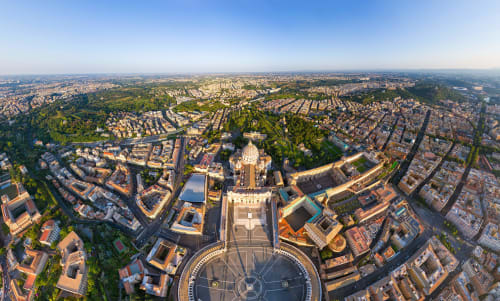
St. Peter's Basilica in the Vatican
The Basilica is a masterpiece of Italian art and is a UNESCO World Heritage Site.
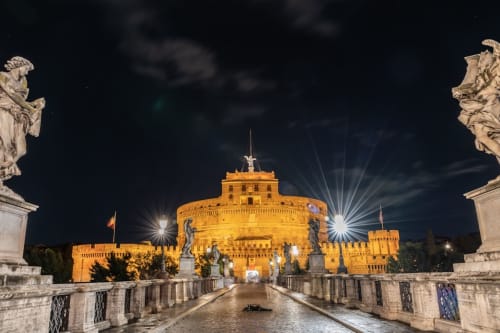
Castel Sant'Angelo
Now known as a national museum, over the centuries it has served as Hadrian's mausoleum, a fortress, a papal residence, and a prison.
Located on the right bank of the Tiber, the Castle is connected to the heart of the city by the evocative Ponte Sant'Angelo, adorned with statues that welcome visitors on a journey suspended between past and present, and to the Vatican via the "Passetto di Borgo," a fortified corridor approximately 800 meters long.
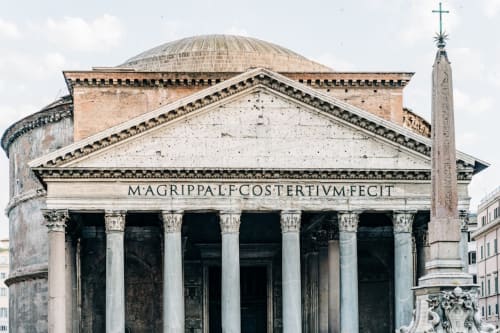
Pantheon
The Pantheon inspired the greatest architects of the Renaissance, so much so that Raphael wanted it as his final resting place.
Originally a "Temple of All the Gods," today it is a Christian basilica called Santa Maria della Rotonda or Santa Maria ad Martyres, and is the most visited Italian state museum.
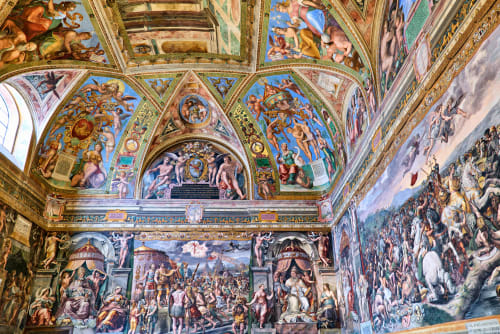
Vatican Museums
Just a 15-minute walk away, the Vatican Museums house one of the world's largest art collections, including the famous Sistine Chapel with Michelangelo's frescoes.
Explore galleries filled with masterpieces, from classical sculptures to Renaissance paintings.
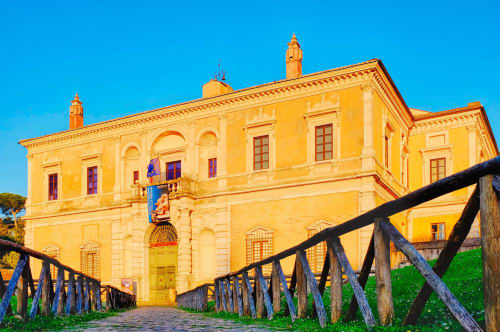
Etruscan Museum
Today among the most representative museums of Etruscan art, ETRU is housed in two splendid Renaissance villas: Villa Giulia and Villa Poniatowski.
It houses artifacts from southern Etruria, a region rich in evidence from various eras and pre-Roman civilizations: Etruscan, Greek, Phoenician, and Faliscan.
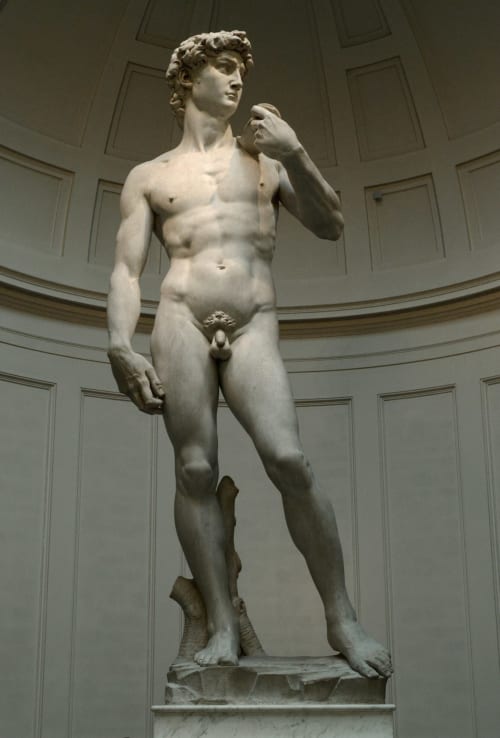
Bourgeois Gallery
Located in the beautiful Villa Borghese park, this art gallery is unique in the world for the number and importance of Bernini's sculptures and Caravaggio's paintings.
It also houses works by Raphael, Perugino, Canova, Rubens, Bellini, Titian, and many other masters.
It is a must-see for art lovers.

Colosseum & Forum
COLOSSEUM
Originally known as the Flavian Amphitheater, it is the largest Roman amphitheater in the world (capacity estimated between 50,000 and 87,000 spectators), located in the center of Rome.
The most important Roman amphitheater, as well as the most impressive monument of ancient Rome that has survived to this day, is a UNESCO World Heritage Site and one of the New Seven Wonders of the World (New Open World Corporation).
ROMAN FORUM - PALATINE HILL - DOMUS AUREA
The Roman Forum is an archaeological area of Rome enclosed between the Palatine Hill, the Capitoline Hill, the Via dei Fori Imperiali, and the Colosseum. It consists of the stratification of the remains of those buildings and monuments from various eras that, for much of ancient Rome's history, represented the political, legal, religious, and economic center of the city of Rome, as well as the nerve center of Roman civilization as a whole.
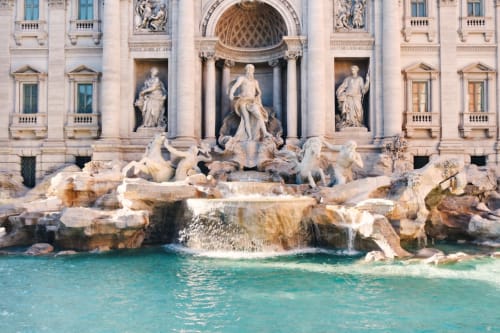
CINEMA CULT
TREVI FOUNTAIN
The Trevi Fountain, the final point of the Virgo Aqueduct, the only ancient aqueduct in continuous use to this day, is the most famous of Roman fountains and provided the splendid backdrop for the most famous scene in Federico Fellini's film La Dolce Vita.
NAVONA SQUARE
Piazza Navona is one of the most spectacular and characteristic urban complexes of Baroque Rome. The square is bordered by buildings that arose on the remains of the stands of the 30,000-seat Stadium of Domitian, whose elliptical shape and dimensions have remained unchanged for 2,000 years.
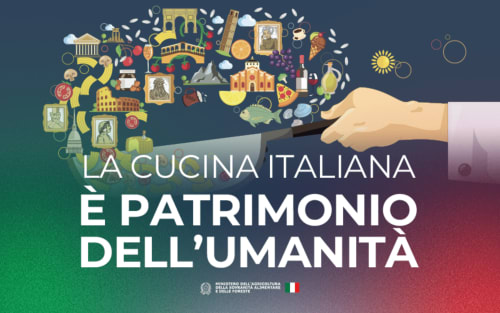
The Great Goodness
The reasons: "It fosters social inclusion, promotes well-being, and offers a channel for lifelong intergenerational learning, strengthening bonds, encouraging sharing, and fostering a sense of belonging."
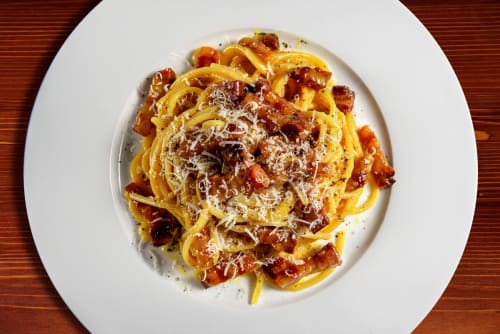
It is the first cuisine in the world to be recognized in its entirety. A tribute to multigenerational practice, recognized as a millennial heritage.
Restaurants
Stairways are a distinctive architectural feature of the Balduina neighborhood, making it similar to San Francisco due to the numerous climbs and descents.
At La Scala del Gusto, you'll find traditional Roman dishes and new pairings created by chef Biagio Maiuri.
Altrogiro
Restaurant and wine bar in Balduina, with a selection of over 300 Italian and international wines.
Gastronomic itineraries of traditional Italian dishes with a touch of international cuisine.
Bottega 94
A meeting place for food and wine lovers, in the heart of Balduina.